


Revealed: Is melamine tableware suitable for microwave heating? Safety guidelines and expert advice
Melamine crockery, commonly known for its durability and lightweight properties, is a popular choice for tableware in households and restaurants. One day, When Xiao Li used melamine tableware to heat food at home, he found that the tableware was deformed, which made him begin to question the safety of melamine tableware.
So, a common question arises: can melamine crockery be safely used in microwave ovens? The answer is generally no, and this is often indicated by a label on the bottom of the dish that reads, “Do not microwave.” Understanding the reasons behind this involves exploring the material’s chemical composition, physical properties, and the potential risks associated with microwave heating.
Chemical Composition and Structure
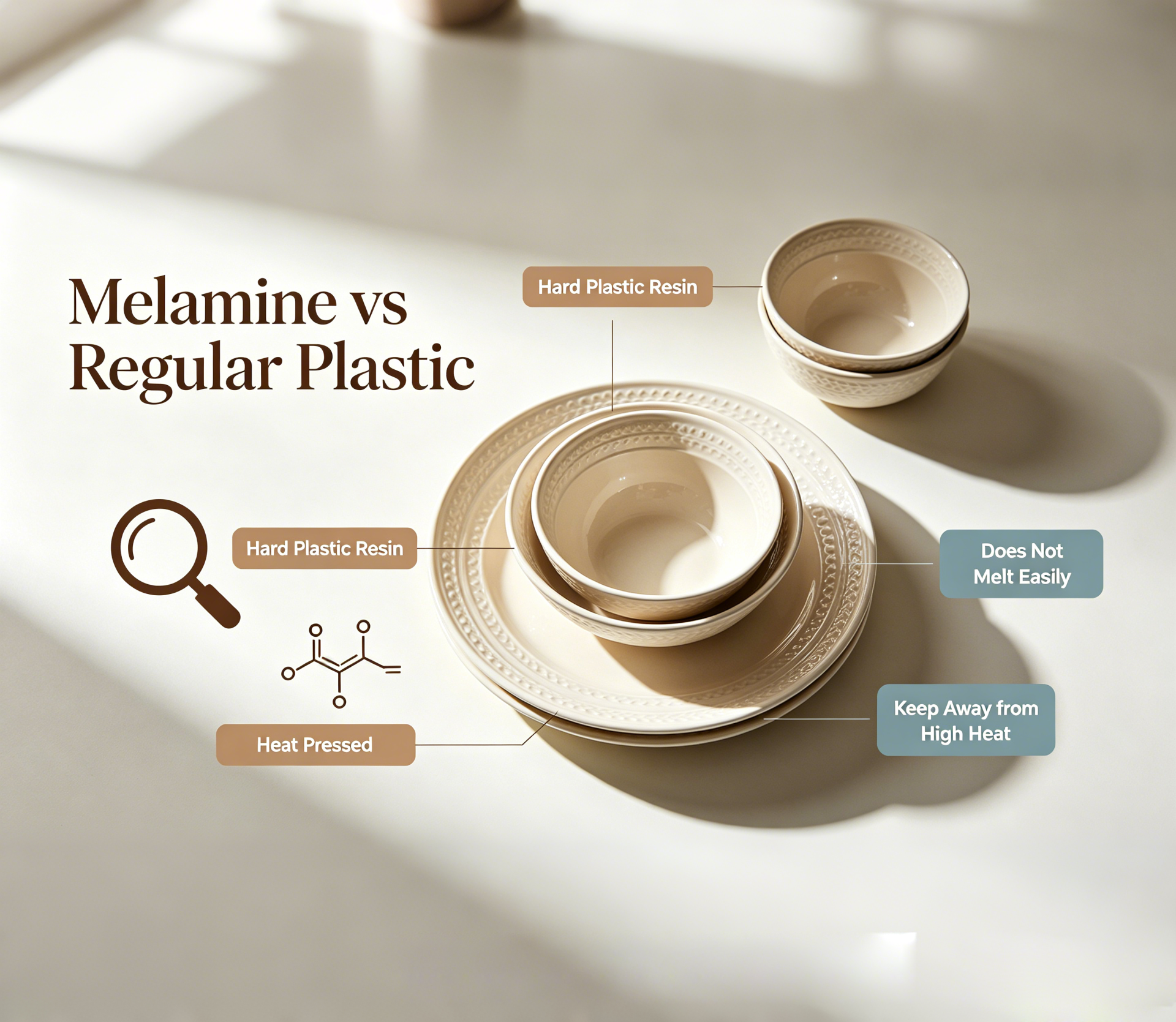
Melamine crockery is made from melamine formaldehyde resin, a thermosetting plastic. The chemical formula for melamine is C₃H₆N₆, and when combined with formaldehyde (CH₂O), it forms a hard, durable plastic. This resin is known for its high resistance to breaking and chipping, making it ideal for everyday use. However, the very properties that make melamine crockery durable also make it unsuitable for microwave use.
Chemical knowledge: The molar ratio of melamine to formaldehyde is 2~3. The first step of the reaction generates different numbers of N-hydroxymethyl substituents, which are then further condensed into linear resins. Different raw materials and reaction conditions result in different product molecular weights, ranging from water-soluble to insoluble in water, or even insoluble and infusible solids.
The curing process of MF resin is usually carried out at 130~150℃, and acid catalysis is generally required to increase the curing speed. The cured MF resin is colorless and transparent, with great chemical activity, high bonding strength, high water resistance, high thermal stability, strong low-temperature curing ability, good wear resistance, fast curing, etc., and no curing agent is required.
So why does MF decompose at high temperatures?
Under high-temperature conditions, MF resin may undergo a series of chemical reactions, such as cross-linking reactions, hydrolysis reactions, and oxidation reactions. The chemical bonds in the polymer chain may be broken by the influence of thermal energy, resulting in resin decomposition. In particular, when the temperature exceeds the thermal decomposition temperature of the resin, the decomposition reaction will accelerate.
What Happens When Melamine Crockery is Microwaved?
- Deformation and Damage: When exposed to the high temperatures generated by microwave ovens, melamine crockery can warp, crack, or even melt. The material’s thermal stability is limited, and temperatures exceeding 70°C (158°F) can cause it to degrade. Microwave ovens can easily reach temperatures above 100°C (212°F), especially when heating liquids or fatty foods, leading to potential deformation and damage.
- Reduced Lifespan: Repeated exposure to microwave heating can significantly shorten the lifespan of melamine crockery. The material’s structural integrity is compromised with each heating cycle, leading to increased brittleness and a higher likelihood of breakage over time.
- Uneven Heating: Melamine’s thermal conductivity is lower compared to materials like ceramic, glass, or metal. This means that heat is not distributed evenly throughout the dish, leading to hot spots that can cause the food to heat unevenly. This uneven heating can result in some parts of the food being overcooked while others remain undercooked, affecting the overall quality and safety of the meal.
Health and Safety Concerns
In addition to physical damage to tableware, there may be health issues with heating melamine in a microwave. The U.S. Food and Drug Administration (FDA) has set a specific migration limit for melamine at 0.5 mg/kg food, emphasizing the need for caution when using melamine products in high-temperature environments. When heated, melamine crockery has the potential to release formaldehyde, a known carcinogen, into food. Formaldehyde release is more pronounced at high temperatures, and prolonged exposure may pose a health risk.
The following are the potential risks of formaldehyde to human health:
- Damage to the respiratory system: After entering the body, formaldehyde will irritate the respiratory mucosa, causing congestion and edema, and in severe cases may even cause bronchospasm. Long-term exposure to formaldehyde can also cause respiratory diseases such as chronic bronchitis and emphysema, manifested as persistent coughing, dyspnea, and other symptoms.
- Impact on the immune system: Formaldehyde will interfere with the normal function of the human immune system, reduce the body’s immunity, and increase the risk of infection. People who are exposed to formaldehyde for a long time have a relatively high risk of infectious diseases.
- Carcinogenic risk: Formaldehyde is listed as one of the carcinogens by the World Health Organization. Long-term exposure may increase the incidence of nasopharyngeal carcinoma, leukemia, lung cancer, and other cancers. Formaldehyde mainly acts on human DNA, causing gene mutations, thereby increasing the incidence of cancer.
For safe and effective microwave use, it is recommended to opt for microwave-safe materials such as ceramic, glass, or microwave-safe plastics.
| Material Type | Price | Durability | Safety | Other Characteristics |
| Ceramic | Medium to High | High | High | Some ceramic containers may contain metal decorations or coatings, which need to be checked before heating; avoid sealing liquids too tightly to prevent an explosion |
| Glass (especially BOROSILICATE glass and tempered glass) | Medium to High | High | High | High heat resistance, capable of withstanding temperatures up to 500°C or even 1000°C |
| Microwave-safe Plastics (PP5 Material) | Low to Medium | Medium | High | Resistant to high temperatures and unlikely to release harmful substances, commonly used for microwave-safe containers |
Conclusion
In summary, while melamine crockery offers many benefits in terms of durability and ease of use, it is not suitable for microwave heating. The material’s chemical composition and physical properties make it prone to deformation, damage, and reduced lifespan when exposed to high temperatures. Welcome to purchase the VitaJoy melamine tableware series. If you have any questions or needs, please contact us immediately.




.jpg)