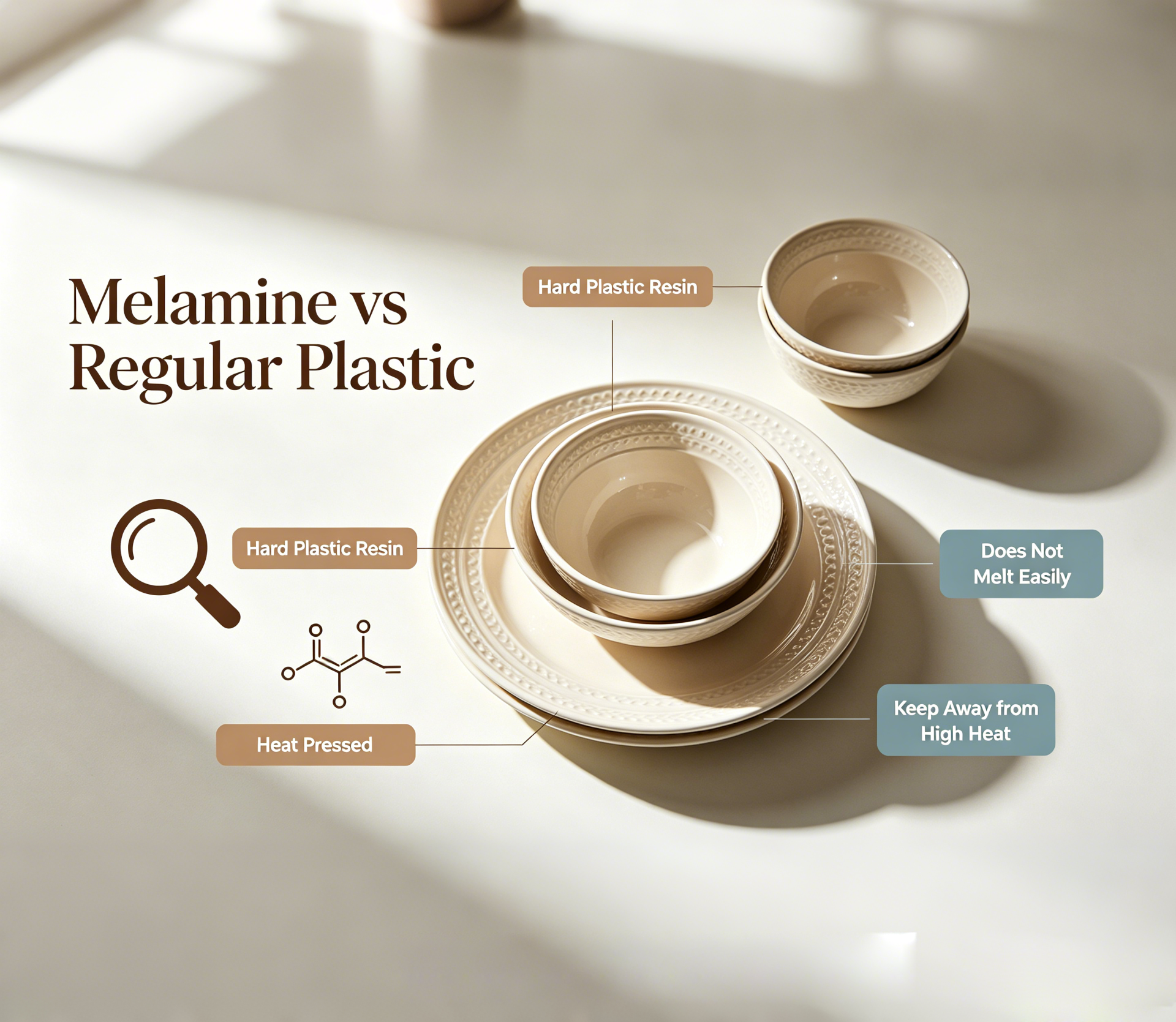

As global awareness of environmental issues grows, more and more people are paying attention to the sustainability of everyday products. Among the various plastic materials, melamine is widely used in dinnerware, kitchenware, and other products due to its unique advantages. However, like many plastic materials, melamine faces recycling challenges, and many consumers wonder, Is melamine recyclable? Can melamine be recycled? How does its environmental impact compare to other plastics? This article will answer these questions and delve into melamine’s recycling technology and its potential for environmental sustainability.
What is Melamine?
Melamine is a durable thermosetting plastic made from melamine resin, known for its heat resistance, sturdiness, and stain resistance. These qualities make it popular in household products, especially dinnerware and kitchenware. Melamine is lightweight, strong, and can withstand high temperatures, making it a common alternative to ceramic or glass. Besides tableware, it’s also used in office supplies, bathroom accessories, and decorative items.

Is Melamine Recyclable?
When answering the question is melamine recyclable, the answer used to be no. This is because melamine is a thermosetting plastic, which undergoes a curing process during manufacturing that permanently locks its molecular structure, meaning it cannot be remelted or reprocessed like thermoplastics. However, with advancements in recycling technology, melamine tableware can now be recycled using innovative methods.
Why Was Melamine Difficult to Recycle?
- Thermosetting Plastic Characteristics: The key feature of thermosetting plastics is that once they are cured (set by heat), their molecular structure becomes permanently fixed. This makes it impossible to melt them and reshape them like thermoplastics, which can be repeatedly heated and processed. Most traditional recycling facilities are designed to handle thermoplastics, making melamine harder to process in the same way.
- Lack of Recycling Facilities: In the past, most recycling facilities did not have the technology or equipment to handle melamine plastic. As a result, melamine was often classified as non-recyclable waste, which led to disposal via landfills or incineration. However, with advancements in recycling technology, more and more companies have started to develop methods to process thermosetting plastics, making melamine recycling possible.
Thanks to these advancements, melamine can now be recycled through specialized processes, reducing its environmental impact.
How is Melamine Recycled?
Although melamine recycling has faced some technological challenges, it is now possible to recycle discarded melamine tableware through specialized recycling processes. Here are the common methods:
- Crushing and Reprocessing: Discarded melamine tableware is first crushed into small particles. These particles are then further processed to become raw materials used in the production of new melamine products. This way, old melamine tableware is converted into new products, reducing the demand for virgin materials.
- Specialized Recycling Facilities: Not all regions have facilities capable of handling melamine recycling. Most traditional recycling centers are unable to process this type of thermosetting plastic. To address this, some regions have developed specialized recycling plants designed to handle melamine and similar materials. These facilities use advanced technologies to efficiently process melamine during recycling.
Through these methods, discarded melamine can reduce the amount of waste sent to landfills and incinerators, while also preventing the unnecessary consumption of resources, thus promoting a circular economy.
Melamine Compared to Other Plastics in Terms of Recycling
To better understand the recyclability of melamine, let’s compare it with other common plastics:
1. Thermoplastic Plastics (such as PET, HDPE)
- High Recyclability: Thermoplastics can be reheated and reprocessed, making them easy to recycle. Common examples include plastic bottles made from PET (like mineral water bottles) and HDPE (such as shampoo bottles), which can be widely recycled around the world.
- Widely Recycled: Due to the high recyclability of thermoplastics, nearly every recycling program accepts these materials. The recycling process is simple, and the recovery rate is high.
2. Melamine (Melamine)
- Traditionally Non-Recyclable: Since melamine is a thermosetting plastic, it was traditionally considered non-recyclable by most recycling systems.
- Potential for Recycling: In recent years, as recycling technology has advanced, melamine recycling has become possible. Through processes like crushing and reprocessing, discarded melamine can be converted into new materials and used in production again.
3. Other Non-Recyclable Plastics (such as Some Composite Materials)
- Difficult to Recycle:These plastics are typically made from a combination of materials, which require separation and breakdown during recycling, making the process complex and costly. As a result, they are often sent to landfills.
The Environmental Advantages of Melamine
Although is melamine recyclable may not always be a definitive “yes.” Melamine still has the unique environmental advantages that make it a valuable material for certain uses:
- Durability: Compared to other single-use plastic products, melamine products are much more durable and can be used for a longer period. They are resistant to heat, impacts, and everyday wear and tear, helping to reduce the need for frequent replacements. This not only reduces waste but also helps conserve resources.
- Safe and Non-Toxic: High-quality melamine dinnerware meets strict food safety standards. It does not contain harmful chemicals and will not release toxic substances into food when used. This makes it a great choice for long-term use, especially for households.
- Reduces Single-Use Plastics: Melamine products, unlike disposable plastic dinnerware, have a longer lifespan, which reduces the reliance on single-use plastic products. This, in turn, helps to minimize plastic waste and its associated environmental impact.

How to Make Melamine More Environmentally Friendly?
While melamine recycling is not always straightforward, there are still ways to maximize its environmental benefits:
- Extend Its Lifespan: Melamine products are durable and easy to maintain. By taking proper care of them and avoiding accidental breakage, you can significantly extend their lifespan, reducing the amount of waste generated.
- Dispose of Properly: Avoid tossing melamine products into regular recycling bins. If you live in an area with limited melamine recycling options, check with local waste management services or specialized companies that can handle melamine recycling.
- Choose High-Quality Products: Opt for melamine dinnerware from trusted brands that prioritize sustainability. These products are often made with higher-quality materials that last longer, helping to reduce their overall environmental impact.
Conclusion
While melamine was once considered non-recyclable, advancements in recycling technology now make it possible to recycle melamine tableware. Proper disposal and extending the lifespan of melamine products help reduce environmental impact.
For eco-friendly, durable melamine dinnerware, Vita Joy offers high-quality products that meet environmental standards. Choose Vita Joy for style, convenience, and sustainability. Have questions? Contact us for more info on our products and recycling practice.