


Dining traditions vary widely across cultures, and the choice of tableware plays a key role in shaping those experiences. From melamine spoons used in everyday meals to the diverse utensils seen in both Chinese communal dining and Western individual serving styles, each item has its own purpose and story. Understanding these tools helps enhance not only table manners but also the enjoyment of food.
I. The Importance of Proper Tableware
A well-set dining table reflects not only hospitality but also cultural values and dining habits. From bowls and plates to chopsticks, knives, and forks, each piece of tableware serves a unique purpose in organizing meals.
One common yet essential item is the melamine spoon, widely used in Asian households and restaurants for soups, porridge, and hot dishes due to its durability and heat resistance. Understanding how different cultures utilize tableware is key to appreciating their food traditions.
II. Tableware Classification and Their Uses
Bowls are fundamental in both Eastern and Western dining. In Chinese cuisine, small bowls are typically used for rice and soup, while larger basins are employed for shared dishes. For example, in a family-style dinner, a basin may hold 1.5–2 liters of soup for multiple servings. The melamine spoon complements these bowls perfectly by maintaining heat without becoming too hot to touch.


Plates vary from flat dinner plates to shallow dessert dishes. In Western culture, plates are central to plated service, where each diner receives their own serving.
In contrast, Chinese dining often uses medium-sized plates for shared cold dishes.
The melamine spoon may also accompany dishes containing gravy or broth, allowing guests to scoop portionsconveniently.
- Chopsticks, Knives, and Forks
 In East Asian dining culture, chopsticks are the primary utensil, typically measuring about 23 to 25 centimeters in length for adult use.Knives and forks, measuring around 20–22 cm, are the main utensils in Western meals.
While chopsticks are ideal for noodles, dumplings, and stir-fries, knives and forks are better suited for cutting and spearing meats.
- Cups and Glassware
Cups for tea, coffee, and water vary greatly in size: an average teacup holds 150 ml, while a Western coffee mug can hold up to 350 ml. Glassware, including wine glasses and tumblers, is more common in Western dining.
In Chinese banquets, porcelain or melamine cups are often used for tea and warm beverages. A melamine spoon is frequently placed alongside these to stir or serve sweet soups and desserts.

- Spoons and Specialty Utensils
Spoons come in different materials—stainless steel, ceramic, and melamine being the most popular. The melamine spoon is especially valued for its lightweight and resistance to temperatures up to 120°C. It is used for soups, stews, and hot desserts, making it an indispensable tool in both home kitchens and restaurants.

III. Tableware in Chinese Shared Dining vs Western Individual Dining
(1) Features of Chinese Shared Dining
In traditional Chinese meals, dishes are commonly set in the middle of the table for everyone to share. Guests often use chopsticks and a melamine spoon to serve themselves.
- Representative Tableware: Rice bowls, bamboo or stainless steel chopsticks, serving spoons, and large soup ladles.
- Example: In a traditional Chinese banquet, a hot pot or a 2-liter soup tureen is often served with several public spoons to maintain hygiene.
(2) The Role of Melamine Spoon in Chinese Dining
Melamine spoons are commonly found in Chinese kitchens, favored for serving soups and stews due to their light weight and resistance to heat.
- Usage Scenario: During family dinners, each diner may have a rice bowl and chopsticks, but a melamine spoonis shared for serving hot broth.
- Advantages:Reduces heat transfer to the hand and resists cracking even with repeated use.
(3) Characteristics of Western Individual Dining
Western dining usually follows a course-based system, where each person has an individual plate and utensils.
- Representative tableware:flat dinner plates, forks, steak knives, dessert spoons, and wine glasses.
- Example:A standard Western dinner may start with a salad on a 20 cm plate, followed by a main course with steak knife and fork, and end with dessert eaten using a small spoon or fork.
(4) Melamine Spoon in Western Cuisine
While less traditional in the West, the melamine spoon is increasingly used for certain dishes.
- Usage Scenario: Ramen, pho, and creamy soups served in Western households often include a melamine spoonfor its durability and ease of cleaning.
IV. Material Considerations in Tableware Selection
1) Durability and Safety
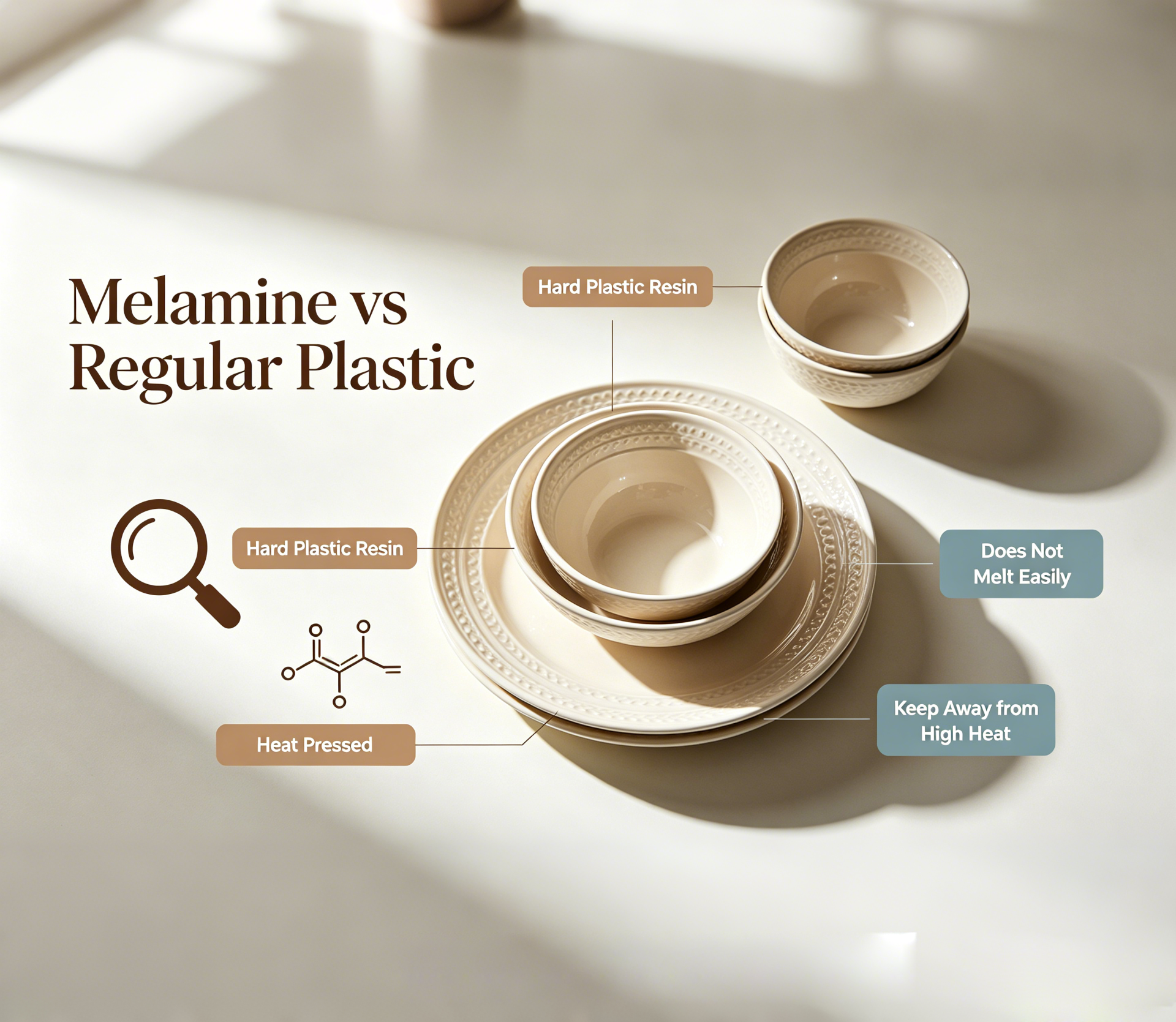
Melamine tableware, including the melamine spoon, is highly durable—lasting over 5 years with proper care. It is resistant to breaking compared to ceramic or glass, making it ideal for children and busy restaurants.
2) Hygiene and Maintenance
Proper cleaning at 60–70°C is essential to maintain hygiene. Stainless steel utensils can withstand higher temperatures, while melamine provides a safe and cost-effective alternative without affecting food taste.
V. Expanding Your Tableware Collection
1) Matching Styles with Occasions
For daily use, a set of 4–6 bowls, 6 plates, 6 cups, and a few melamine spoons are sufficient. For formal dinners, adding wine glasses, steak knives, and serving platters creates a refined dining experience.
2) Cultural Fusion Dining
As global dining habits merge, many households now mix chopsticks with forks or pair Western plates with a melamine spoon to enjoy international cuisines.
VI. Making the Right Choice
Understanding the classification and usage of tableware ensures not only a beautiful dining setup but also a practical and culturally aware experience. From bowls and cups to the humble melamine spoon, every piece plays its role in making meals enjoyable and safe.




.jpg)