


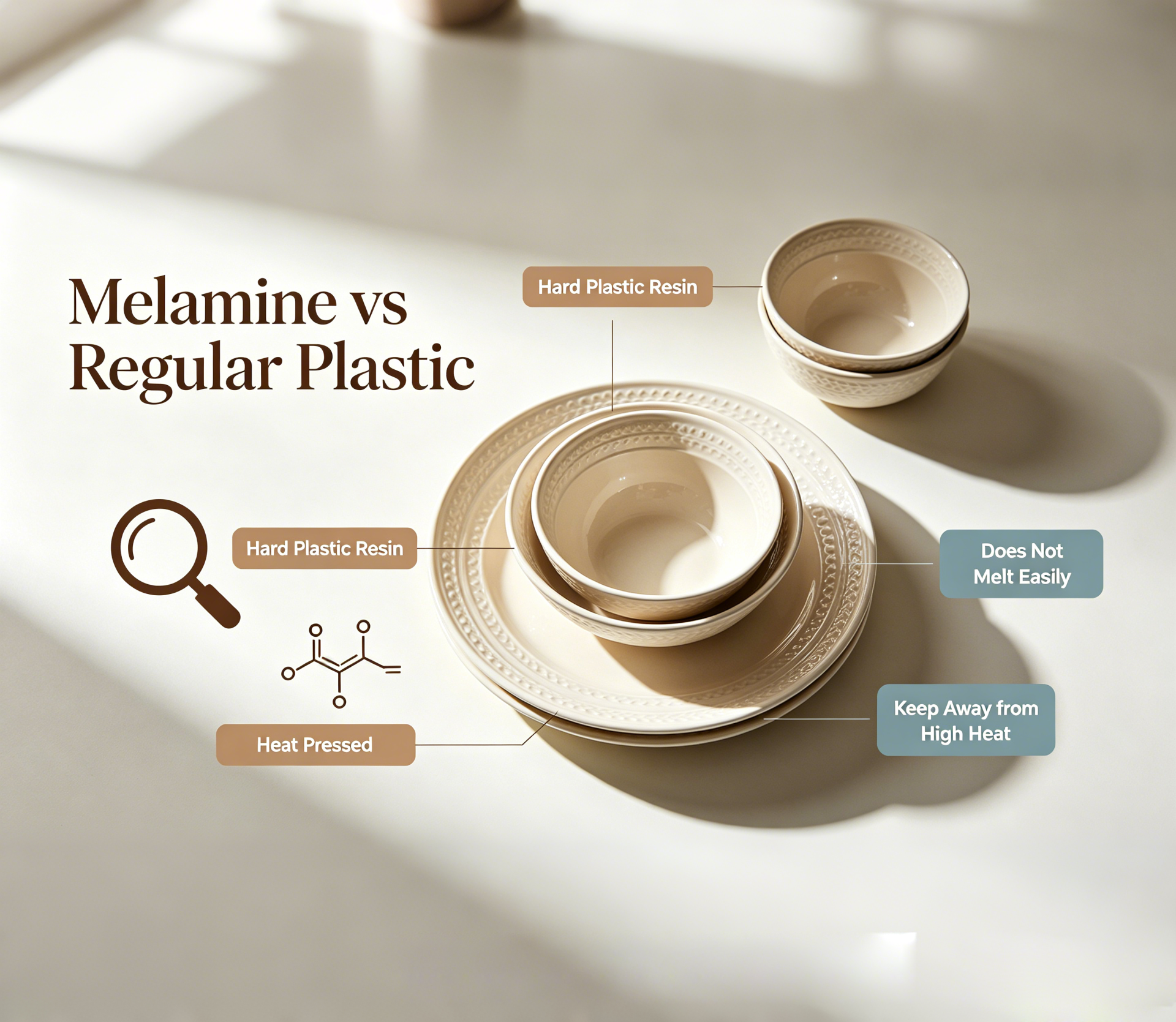
Families, schools, and restaurants have been wondering, “Is Melamine a Plastic” when they go shopping for tableware. Why? Melamine tableware is light, colorful, and durable just like ordinary plastic tableware. But melamine is not a different plastic; it is a chemical compound which, when blended with formaldehyde, becomes a thermosetting resin.
That is the reason why tableware produced from melamine is different from ordinary plastics like polypropylene cups or polyethylene containers.The piece makes allowances for those differences at some length, beginning with tableware but extending to general use and implications.

Understand the Question: Is Melamine a Plastic
- Visual and Functional Similarities
The question “Is Melamine a Plastic” often arises because melamine tableware looks and feels very similar to plastic. Both materials can be remolded into plates, bowls, and cups, which leads many to assume they are chemically the same. Thermoplastics, such as polypropylene, typically melt at around 160°C and can be reshaped when recycled, reinforcing the idea of flexibility and reusability.
- Key Chemical Differences
Chemically, melamine belongs to the family of thermosetting materials, not thermoplastics. During production, melamine resins undergo an irreversible fusion process. As a result, they do not soften or flow again, even at temperatures up to 200°C. This structural property explains why melamine tableware remains stable when holding boiling soup, while a plastic bowl made from thermoplastics would warp under the same conditions.
Durability in Everyday Use: Comparing Tableware
When discussing Is Melamine a Plastic in real-life scenarios, durability is of first concern. Testing reveals that melamine plates can endure 50,000 washing machine cycles in industry without dulling or colour loss, whereas regular plastic plates discolor or wear away within 5,000 cycles. That tenfold advantage makes melamine so popular in schools, hospitals, and cafeterias where washing is high.
Key Comparison in Durability
|
Feature |
Melamine Tableware | Plastic Tableware (Polypropylene/PE) |
|
Heat Resistance |
Up to 200°C | 100–120°C |
|
Dishwasher Life Cycles |
50,000+ |
5,000–10,000 |
| Scratch Resistance | High |
Moderate to Low |
| Break Resistance | Strong, but can chip |
Can crack or deform |
This table illustrates that the two materials are blended in appearance but perform differently in practice.
Safety Perceptions: Is Melamine a Plastic Safe for Food?
Another reason why individuals ask “Is Melamine a Plastic” is due to safety. Because melamine does have uses in resins, adhesives, and even industrial coatings, customers wonder if it is safe for food contact.
- Regulatory Standards and Everyday Use
Regulatory agencies declare it officially: properly manufactured melamine dinnerware is safe to use with food. For example, the European Union allows 2.5 mg of melamine migration per kilogram of food. Such strict regulation means that under normal use, such as hot soup or rice, melamine plates will not leach out toxic levels of chemicals.
In contrast, plastics like polypropylene or polyethylene are also food-safe but can warp or leach additives at high temperatures, especially when microwaved. Thus, both products usually carry warnings like “not microwave-safe.”

Industrial Applications of Melamine
The query “Is Melamine a Plastic” does not remain within the kitchen. Melamine is widely used in other industries:
- Laminates: Melamine resins are used in high-pressure laminates on countertops and furniture surfaces, offering scratch resistance and heat stability.
- Flame Retardants: Melamine emits nitrogen gas when heated, suppressing flames in clothing or insulation.
- Automotive Uses: Melamine resins are used in interior panels and coatings for hardness and durability.
This shows why industries value melamine for performance that typical plastics cannot offer.
Melamine vs. Plastic: What Happens Under Heat
Due to its plastic-like appearance, many assume melamine melts like ordinary plastics. Asking “Is Melamine a Plastic” becomes relevant when consumers realize melamine plates resist higher heat than polypropylene but still cannot be microwaved.
- Melamine does not melt but may suffer surface degradation in microwaves.
- Polypropylene bowls soften or deform under repeated heating.
This is why manufacturers label melamine tableware as both “dishwasher-safe” and “not microwave-safe,” a dual message that often confuses consumers.
Design Freedom and Aesthetic Value
Compared to plastics, melamine offers greater design flexibility. Melamine resins allow intense colors, marble finishes, or even blends with bamboo fibers.
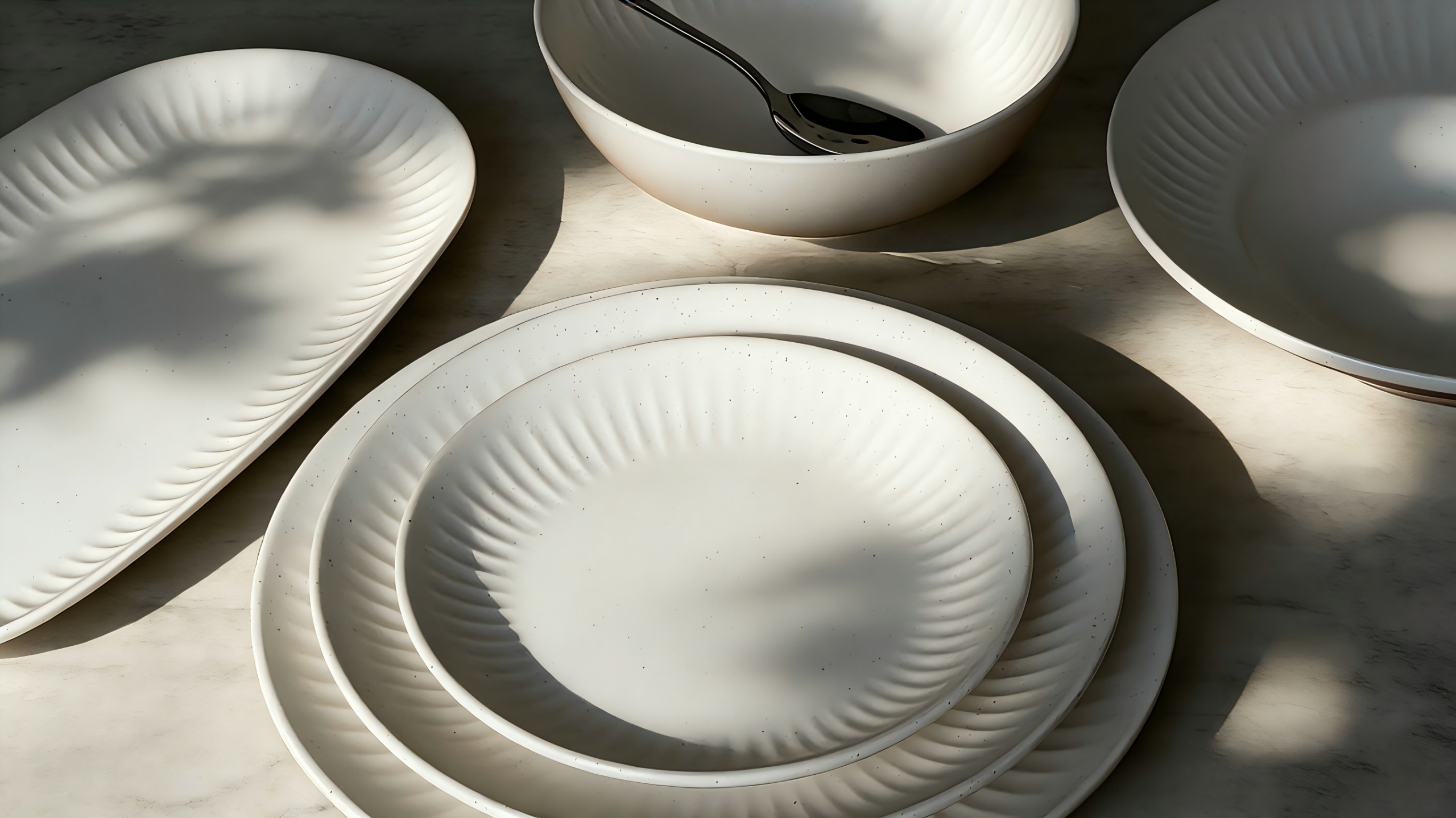
- Melamine plates resemble porcelain or ceramic but weigh only 30–40% as much.
- In cruise ships, airlines, or outdoor dining, this weight reduction improves safety and lowers transport costs.
- Plastic plates, although colorful, lack the glossy finish and elegance of melamine.
This distinction explains why melamine dominates the mid-range restaurant and institutional markets.
Conclusion: A Clear Answer
Melamine looks and feels like plastic, which causes confusion. But chemically, melamine resins form a thermosetting material with properties very different from thermoplastics.
- In tableware, melamine offers superior heat resistance, durability, and design versatility.
- In industry, melamine supports laminates, flame retardants, and automotive applications.
- For households, schools, and restaurants, understanding these distinctions ensures safer, smarter purchases.
Ultimately, melamine should not be remembered as just “another plastic” but as a unique material bridging plastics and ceramics in modern life. Choosing trusted brands such as Vitajoyware further ensures reliable quality, safety, and stylish design, making melamine tableware a dependable option for everyday use.




.jpg)